
When people first think about making games, coding is usually the first skill that comes to mind. While programming is important, it’s far from the only ingredient that makes a great game. The most successful games stand out because of thoughtful game design skills, engaging gameplay, and a deep understanding of what motivates players.
If it’s your first mobile game or you’re working toward becoming a professional game designer, improving your game design skills can have a bigger impact than simply learning another programming language. From player psychology to level design, these skills help turn good ideas into games players genuinely enjoy.
Why Game Design Skills Matter More Than Ever
Modern players have more games to choose from than ever before. Standing out isn’t about having the most advanced graphics or the longest feature list. It’s about creating an experience that players remember.
Strong game design skills help you:
- Build gameplay that keeps players engaged
- Design satisfying progression systems
- Create memorable player experiences
- Balance challenge and reward
- Prototype and improve ideas quickly
Whether you’re developing indie games or your first mobile title, investing in your game design skills will pay off throughout your game development journey.
1. Understanding Player Psychology
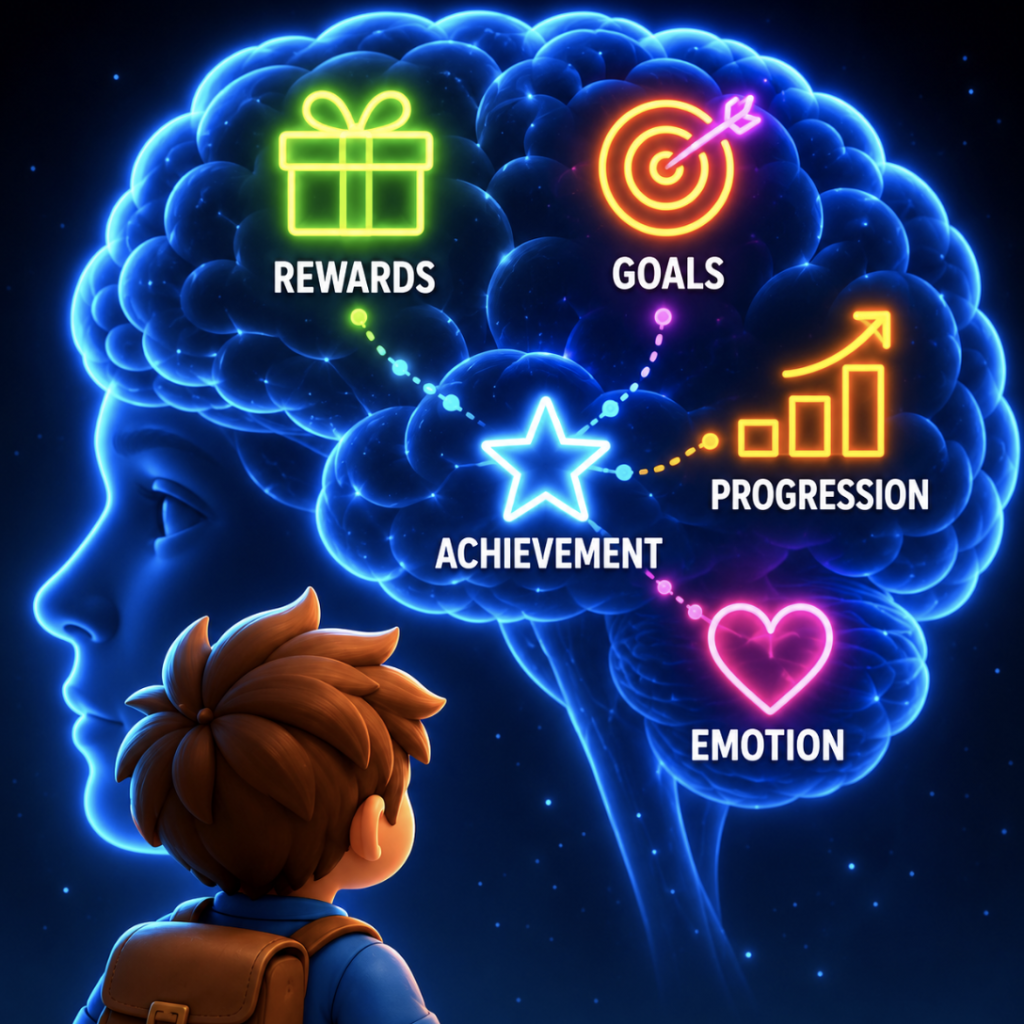
Great game designers think like players.
Why do players keep coming back to certain games? What makes someone complete “just one more level?” The answers often come down to player psychology rather than technology.
Successful designers understand concepts like:
- Reward loops
- Progression systems
- Curiosity and discovery
- Challenge versus frustration
- Motivation and player goals
Every mechanic should give players a reason to continue playing. If your game feels rewarding and satisfying, players are much more likely to stay engaged.
Want to dive deeper into player psychology? Check out our guide, The Psychology of Game Design: How to Keep Players Engaged, to learn how reward systems, feedback, and player motivation create more addictive gameplay.
Player psychology also helps you make better design decisions long before your game launches. Every reward, sound effect, animation, and achievement should reinforce positive behavior and encourage players to keep exploring. Small touches like satisfying visual feedback, meaningful progression, and well-timed rewards can make even simple gameplay feel exciting. By studying player psychology and observing how people interact with your game, you’ll continue developing the game design skills needed to create experiences that players remember and recommend to others.
2. Designing Fun Gameplay Loops
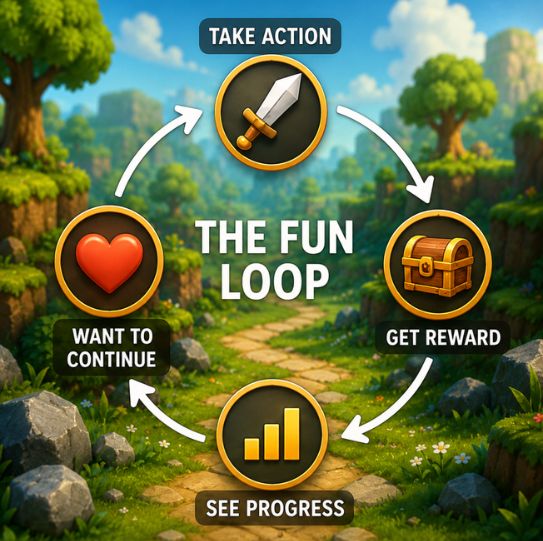
One of the most valuable game design skills is creating a gameplay loop players never get tired of.
A gameplay loop is the series of actions players repeat throughout your game. Even simple games can become incredibly addictive when this loop is polished and rewarding.
Ask yourself:
- Is the core action fun?
- Does each play session feel rewarding?
- Are players constantly making interesting decisions?
- Does each round encourage another attempt?
Many successful indie games rely on one polished gameplay loop rather than dozens of complicated features.
If you’re looking to improve your gameplay design, read Fundamentals of Game Design: What Every New Developer Should Know for more practical tips on creating engaging gameplay.
As you improve your game design skills, remember that every new feature should strengthen your core gameplay loop rather than distract from it. It’s tempting to keep adding mechanics, power-ups, or game modes, but too many systems can overwhelm players. Focus first on making the core loop enjoyable. Once that foundation feels polished, every additional feature becomes an enhancement instead of a distraction. Great gameplay isn’t measured by how many mechanics you include, but by how satisfying those mechanics feel every time players interact with them.
3. Balancing Difficulty
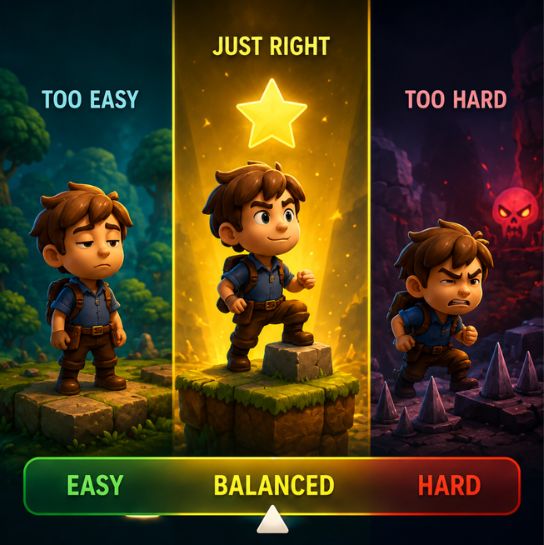
Another essential game design skill is balancing difficulty.
A game that’s too easy quickly becomes boring. A game that’s too difficult becomes frustrating. Great designers create a challenge that constantly pushes players without making them want to quit.
Good balancing includes:
- Gradually increasing difficulty
- Teaching mechanics naturally
- Rewarding player improvement
- Avoiding unfair failures
- Giving players opportunities to recover from mistakes
The goal is to keep players feeling challenged while making every success feel earned.
Difficulty balancing should also evolve throughout development. New players need enough guidance to learn the basics, while experienced players want challenges that reward mastery. Many successful games gradually introduce new mechanics one at a time, allowing players to build confidence before increasing the challenge. Testing your game with people of different skill levels is one of the fastest ways to improve your game design skills and identify moments where players become confused, bored, or frustrated.
4. Level Design That Guides Players
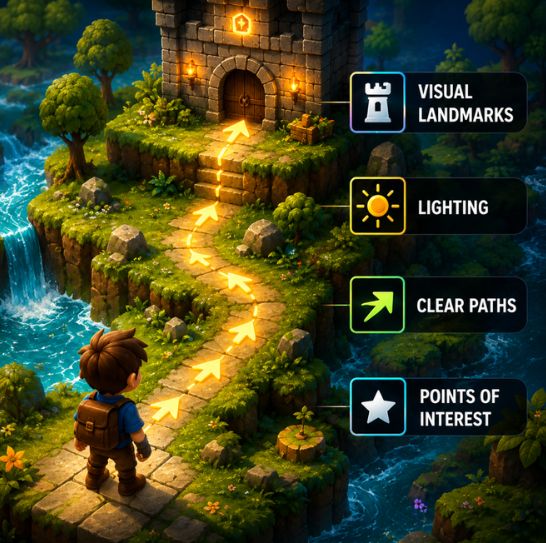
Strong level design is about guiding players naturally without constantly telling them what to do.
Instead of relying on lengthy tutorials, use:
- Visual landmarks
- Lighting
- Color contrast
- Environmental storytelling
- Smart placement of obstacles and rewards
Every level should introduce new ideas while reinforcing previously learned mechanics. Thoughtful level design is one of the most important game design skills every developer should practice.
Great level design is often invisible. Players should naturally discover where to go without constantly relying on arrows, tutorials, or objective markers. Clever use of lighting, color, environmental storytelling, and object placement can subtly guide attention while maintaining immersion. As you continue building your game design skills, practice designing levels that teach through gameplay instead of lengthy explanations. When players learn by doing, the experience feels much more rewarding.
5. Iteration Beats Perfection
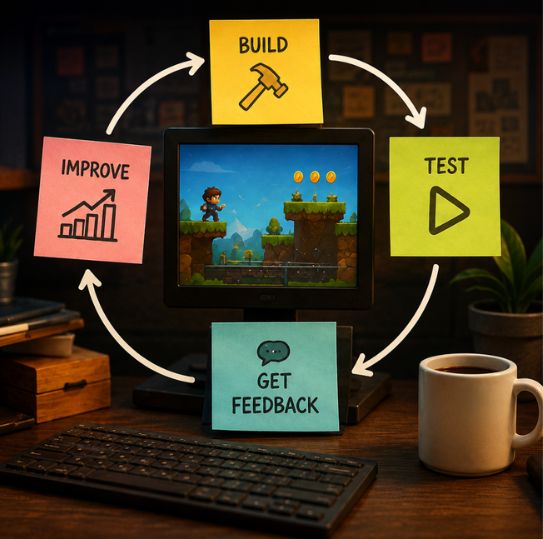
Your first idea probably won’t be your best.
Professional game designers constantly test, adjust, and improve their games based on player feedback. Small tweaks to movement speed, enemy placement, or scoring systems can completely change how gameplay feels.
Instead of chasing perfection, focus on rapid iteration:
- Build quickly
- Test often
- Watch real players
- Make improvements
- Repeat
The strongest game design skills are developed through testing, experimentation, and continuous refinement.
Every successful game goes through countless revisions before release. Professional studios constantly prototype, playtest, and adjust mechanics based on player feedback. Don’t be discouraged if your first version isn’t perfect. Each round of testing teaches something valuable about your gameplay, pacing, and overall player experience. The willingness to learn from feedback and continually improve is one of the most valuable game design skills any developer can build, regardless of experience level.
6. Creativity With Constraints
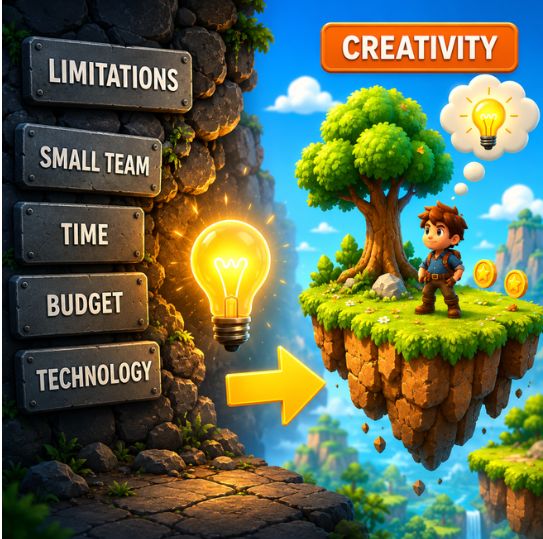
Many legendary games were created with small budgets, tiny teams, or surprisingly simple mechanics.
Rather than seeing limitations as obstacles, use them as creative fuel.
Ask yourself:
- What is the simplest version of this idea?
- Can one mechanic create multiple gameplay experiences?
- What makes this game different?
Some of the most memorable games prove that creativity often matters more than complexity.
Some of gaming’s biggest hits began with limited budgets, small teams, or simple ideas that were executed exceptionally well. Constraints force you to prioritize what truly matters and often lead to more focused, memorable gameplay. Instead of asking what features you can add, ask what features provide the greatest value for players. Developing this mindset strengthens your game design skills and helps you create games that feel polished rather than overloaded with unnecessary mechanics.
7. Communication and Planning
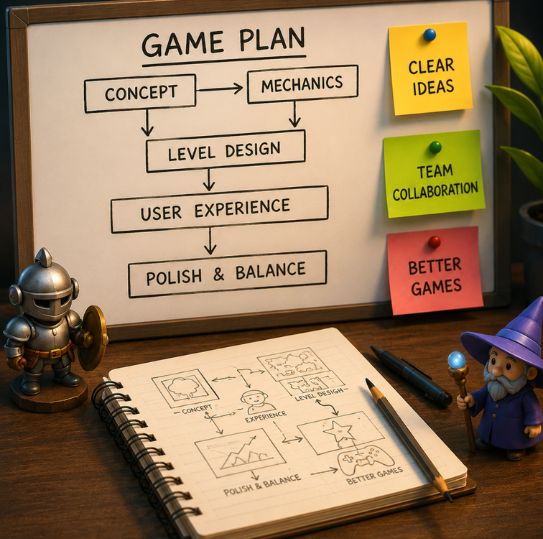
Game development rarely happens alone.
Whether you’re collaborating with artists, musicians, or fellow developers, communication is one of the most overlooked game design skills.
Helpful planning habits include:
- Writing clear design documents
- Creating gameplay flowcharts
- Organizing development tasks
- Prioritizing important features
- Giving constructive feedback
Even solo developers benefit from documenting ideas before building them.
Clear communication becomes even more important as projects grow in size. Well-organized design documents, gameplay flowcharts, and feature roadmaps help everyone stay aligned on the game’s vision. Even if you’re working solo, documenting your ideas makes it easier to stay organized and evaluate new features objectively. Strong communication is one of the most underrated game design skills, helping teams move faster, avoid unnecessary revisions, and deliver a more polished final game.
Coding Is Just One Tool
Learning to code is valuable, but coding alone won’t make a game fun.
Players remember memorable mechanics, satisfying progression, polished gameplay, and meaningful experiences far more than the technology powering them.
The strongest game developers combine technical knowledge with game design skills, player empathy, creativity, and a willingness to iterate. Those are the qualities that transform a working prototype into a game players love.
If you’re looking for more inspiration, don’t miss our guide 20 Indie Dev Tips for Awesome Game Design, packed with practical advice you can apply to your next project.
Practice Your Game Design Skills With Buildbox
The best way to improve your game design skills is to start building.
Create small projects. Test your ideas. Watch how players interact with your game. Refine your mechanics and repeat the process. Every project teaches valuable lessons that make you a stronger game designer.
With Buildbox, you can rapidly prototype ideas, experiment with gameplay mechanics, improve level design, and iterate quickly without getting bogged down in complex programming. That means you can spend more time developing the game design skills that truly make great games.
Every great game starts with a great idea. Build your next one with Buildbox.
Download Buildbox!


